


Everything you own, in one place.
Orderist finds your accounts, memberships, pensions, property, insurance and documents, and keeps them current — so you're always ready when life changes.


To write a valid will in England or Wales, you must be 18 or over, of sound mind, put it in writing, and sign it in the presence of two witnesses who are both 18 or over and not beneficiaries. Scotland and Northern Ireland have their own variations. You can write a will yourself, use an online will-writing service, or instruct a solicitor; the right choice depends on how straightforward your estate and wishes are, not on cost alone.
Fifty-six in every hundred UK adults don't have a will. For most people it isn't a decision, it's just something that keeps getting pushed to next year. This guide covers what actually has to be true for a will to be legally valid in the UK, the realistic choices for writing one, what to include, and how to keep it current once it exists.
The core rules are set by the Wills Act 1837 (as amended) for England and Wales, and by similar frameworks in Scotland and Northern Ireland. For England and Wales, a will is legally valid when it meets all of the following:
● The person making it (the testator) is 18 or over.
● They are of sound mind and acting voluntarily, not under pressure from anyone else.
● The will is in writing.
● The testator signs it in the presence of two witnesses, both 18 or over, who each have a clear view of the signing.
● Both witnesses then sign in the presence of the testator (though not necessarily at the same time as each other).
● Neither witness (nor their married partner) is left anything in the will. If they are, the gift to them is void, though the rest of the will usually still stands.
These formalities are set out in practical terms on gov.uk's guidance on making sure your will is legal.
Scotland sets a lower minimum age (from 12) and, in most cases, requires only one witness rather than two, alongside its own execution formalities. Northern Ireland follows rules very close to England and Wales. If you live in, or hold property in, more than one UK jurisdiction, this is one of the few areas worth getting specific advice on rather than assuming the rules are the same everywhere.
There are three realistic routes, and the right one depends on how complicated your estate and wishes are, not simply on what feels cheapest.
● DIY (template or handwritten): the cheapest option, and legally valid if the formalities above are followed exactly. The risk isn't the cost, it's a small drafting error (an ambiguous gift, a missed witness rule, an out-of-date executor) that isn't discovered until it's too late to fix. Best suited to very simple estates and straightforward wishes.
● Online will-writing services: a structured, guided version of DIY, usually cheaper than a solicitor and faster than booking an appointment. Reasonable for straightforward situations; less reasonable the moment there are stepchildren, business assets, trusts, or anyone who might be expected to contest the will.
● A solicitor: the right choice for anything that isn't simple: blended families, overseas assets, business ownership, a vulnerable beneficiary, or a wish to reduce Inheritance Tax exposure through trusts. A solicitor also carries professional indemnity insurance, which a DIY or template will does not.
As a rough guide, a straightforward solicitor-drafted single will in the UK often costs somewhere in the £150 to £500 range, with mirror wills for couples somewhat more, and complex estates involving trusts running higher; online will-writers are typically well under £100. Prices vary considerably by firm and region, so treat these as a starting point for a conversation rather than a quote.
Most of the actual work of writing a will is deciding things, not drafting language. Before starting, it helps to have already worked out:
● Who your executor(s) will be, and whether they have agreed to take on the role.
● Who should inherit what, including specific gifts (a piece of jewellery, a sum of money) as well as the residue of the estate.
● Who should act as guardian for any children under 18.
● What should happen if a beneficiary dies before you do.
● Whether you want to leave anything to a charity.
● A complete, current list of what you actually own, since a will can only distribute what's in it, and a list that's several years out of date is one of the most common reasons an estate doesn't go the way the person intended.
This is the step where an otherwise well-written will most often goes legally wrong, because the rules have to be followed exactly, not approximately.
● Both witnesses must be present at the same time as the testator signs, and must actually watch the signature happen, not simply be in the same building.
● Witnesses must then sign themselves, in the presence of the testator, though the two witnesses do not need to sign at the same moment as each other.
● Nobody who is due to inherit anything under the will, or their spouse or civil partner, should act as a witness. Family members who are not beneficiaries can witness; the rule is about the gift, not the relationship.
● If the testator is physically unable to sign, someone else can sign on their behalf, in their presence and at their direction, following the same witnessing rules.
A will that can't be found is, for practical purposes, no better than no will at all. Common storage options include keeping the original with a solicitor or will-writing service, storing it with the Probate Service for a small fee, using a bank's safe custody service, or keeping it at home in a fireproof box. Wherever it's kept, the executor and at least one other trusted person should know exactly where the original is and, ideally, know that a will exists at all.
A will isn't a one-off document. It should be reviewed after any of the following, and at minimum every few years even if nothing obvious has changed:
● Marriage or civil partnership (in England and Wales, marriage automatically revokes an existing will made before it, unless the will was written specifically in contemplation of that marriage).
● Divorce or separation.
● Having a child, or a grandchild.
● Buying property, or a significant change in what you own.
● The death of an executor or a beneficiary named in the will.
● A change of mind about who should be an executor or guardian.
Small changes can sometimes be made with a codicil, a formally signed and witnessed amendment; anything more than a minor change is usually clearer, and safer, as a new will that explicitly revokes the old one.
If you die without a valid will in place, your estate is distributed under the rules of intestacy rather than according to your own wishes. In England and Wales, this follows a fixed order (spouse or civil partner first, then children, then other relatives) that takes no account of unmarried partners, stepchildren, or personal wishes of any kind. It's a separate topic covered in full in our intestacy guide, but it's the single strongest reason to have a will in the first place, however simple your estate.
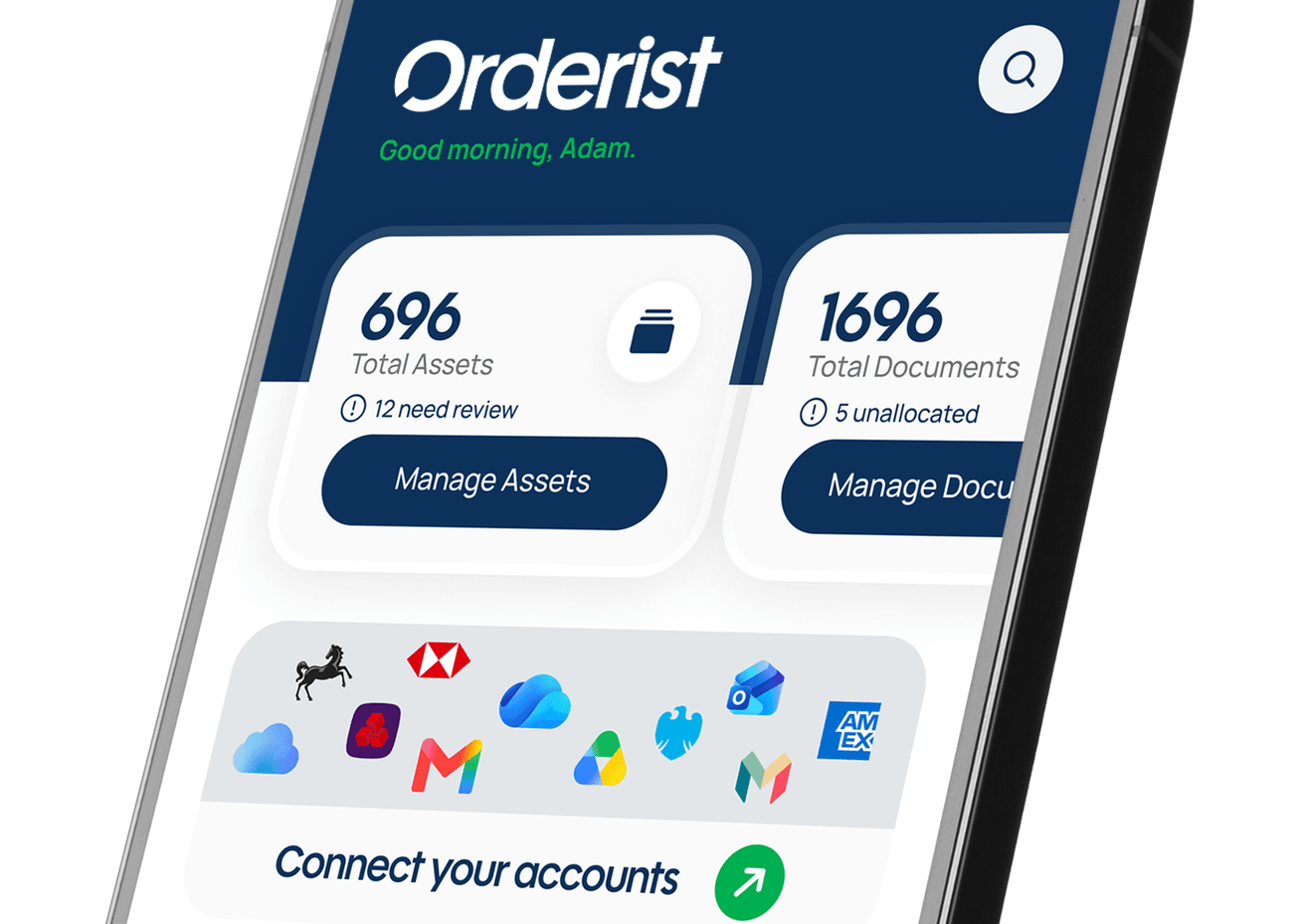
Orderist's Will Builder is one of the online will-writing routes described above. It’s built directly on top of your Orderist asset register, so the people, property and accounts you’ve already recorded carry straight into your will, and stay in sync as your record updates, ready for signature when you want to finalise it. It works well for the straightforward end of the spectrum described above; anything blended, cross-border, business-related or trust-related is still a solicitor conversation, not a DIY or online one. Start building your will, free, whenever you’re ready.
Online will-writing services are often under £100; a straightforward solicitor-drafted will is commonly in the £150 to £500 range, with more for complex estates or trusts. Prices vary by firm and region.
No. A will you write yourself, or through an online service, is legally valid if it meets the formal requirements. A solicitor is strongly advisable for anything beyond a simple estate: blended families, business assets, overseas property, or tax planning.
Two, both aged 18 or over, both present when you sign, and neither entitled to inherit anything under the will.
In England and Wales, yes, in most cases, unless the will was written specifically in contemplation of that marriage. It should be reviewed and usually rewritten after a marriage or civil partnership.
After any major life event, marriage, divorce, a new child, buying property, or the death of an executor or beneficiary, and at minimum every few years regardless.
This article is informational and does not constitute legal advice. Orderist is not a legal adviser: Orderist helps you produce a will you can validly execute without a solicitor, and gives no advice on trusts, inheritance tax, exclusions, or whether your estate needs specialist input. For complex estates, or if you're unsure, we'd recommend speaking to a solicitor.