


Everything you own, in one place.
Orderist finds your accounts, memberships, pensions, property, insurance and documents, and keeps them current — so you're always ready when life changes.
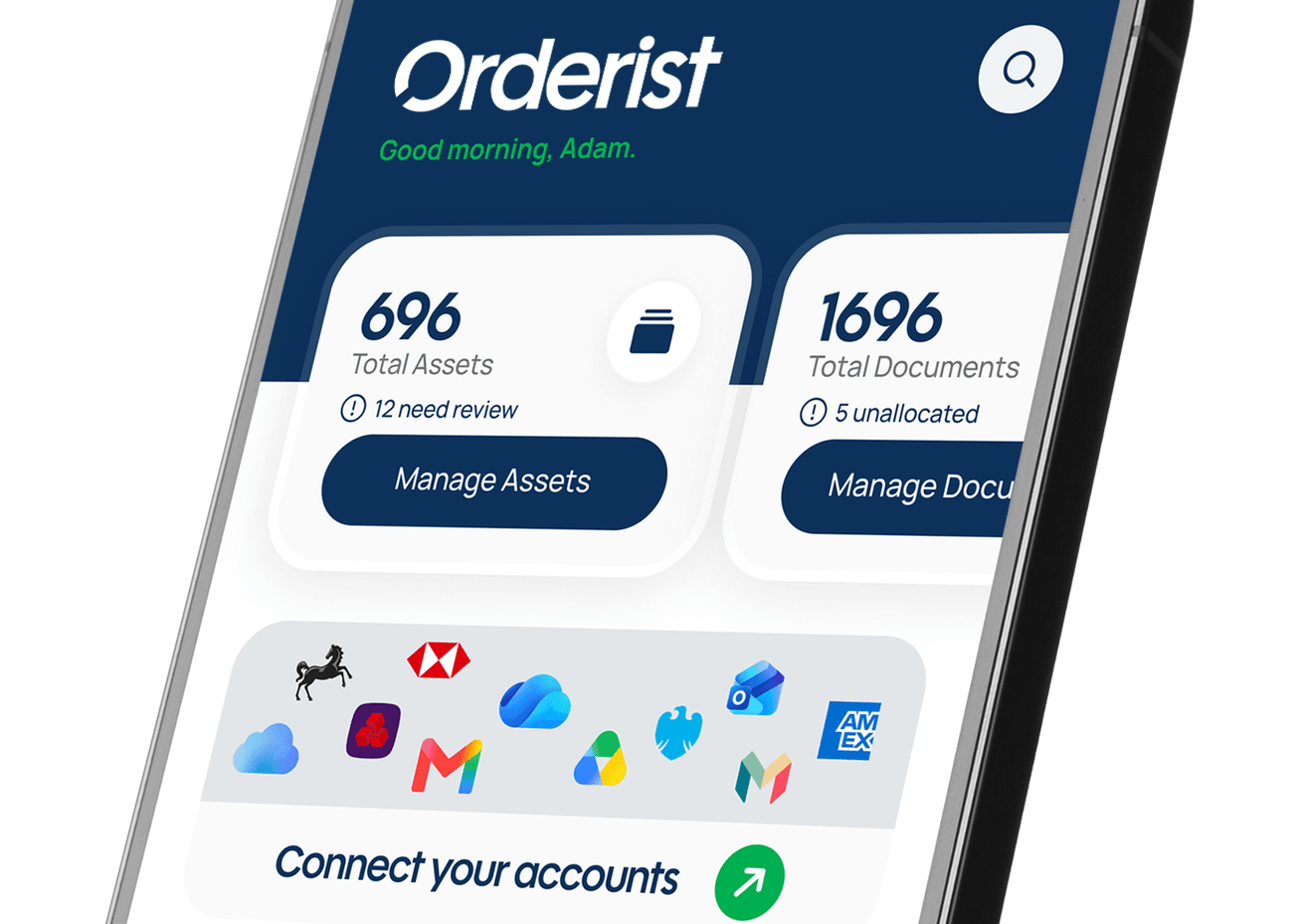


Getting your finances in order means building one current list of everything you own, accounts, pensions, property, policies and documents, rather than leaving it scattered across logins, providers and old paperwork. In the UK, an estimated £50bn in personal wealth goes unrecorded every year, not lost exactly, just not tracked anywhere a person, or their family, can see it all at once. The fix isn't a better spreadsheet; it's keeping the record current, which is the part spreadsheets are worst at.
You already know roughly where the gaps are. An old pension from a job you left a decade ago. An ISA you opened once and haven't logged into since. A folder of paperwork you've been meaning to sort. None of this is unusual, it's close to the default state of most people's finances in the UK, and it's worth understanding why before getting into how to fix it.
The average working life in the UK now involves multiple employers, each with its own workplace pension, multiple banks chasing switching bonuses or better rates, and a growing list of digital-only accounts that never generate paper post to remind you they exist. None of this is poor financial management, it's just what a normal financial life looks like after a decade or two, and it compounds quietly because nothing forces a review until something goes wrong or someone dies.
● 41% of UK adults aged 35 and over say they're relying on an inheritance for their own financial security, which makes an accurate picture of what's actually there considerably more than a tidiness exercise.
● 56% of UK adults have no will, which means even a well-organised set of assets has no instructions attached to it.
● An estimated £7 trillion will move across UK generations over the next 30 years, much of it between people who have never seen a complete picture of what they're inheriting.
The starting point is a single list, not a perfect one. For each item, you want four things: what it is, where it is (provider or institution), roughly what it's worth, and who, if anyone, is named as a beneficiary on it. Work through these categories in order:
1. Current and savings accounts, across every bank, including ones you rarely use.
2. Pensions, workplace and personal, going back through every employer.
3. ISAs, investments and any shares held directly.
4. Property, and how it's owned (sole name, joint tenants, or tenants in common, since this changes what happens to it later).
5. Insurance policies: life, income protection, critical illness.
6. Debts and mortgages, which need to be part of the picture too, not just the assets.
7. Digital assets: domain names, cryptocurrency, significant cloud storage, anything with real value or real difficulty replacing.
8. Key documents: passport, property deeds, marriage certificate, existing will.
A spreadsheet can hold this list, but it's the wrong place to leave it: nothing updates it automatically, nothing reminds you when a pension provider changes its name, and it becomes exactly as out of date as the last time you opened it. Unlike spreadsheets, Orderist stays current automatically, which is the one part of this job worth not doing by hand.
If you've had more than two or three employers, there's a reasonable chance at least one workplace pension is sitting somewhere without a current address for you. The UK government's free Pension Tracing Service can find contact details for a scheme if you know the employer or provider's name; it can't confirm a pension exists or tell you what it's worth, only where to ask. For dormant bank accounts, the relevant providers and industry schemes can search using identifying details like a former address; a solicitor or, for larger or older estates, a professional asset-tracing firm can help where the paper trail has gone cold.
Building the list once is a Saturday afternoon of admin. Keeping it accurate is the actual problem, because life keeps generating changes a static document can't track on its own: a pension consolidates, a new account opens, a beneficiary nomination becomes outdated after a divorce, a policy lapses without anyone noticing. A spreadsheet doesn't know any of this happened. This is the specific gap Orderist is built to close: rather than a one-off inventory, it's a record that stays current through a combination of what you enter yourself and read-only discovery (Open Banking and email scanning) that surfaces new or forgotten accounts for you to confirm, so the picture doesn't quietly go stale the way a spreadsheet does.
● List every account you can think of first, from memory, before searching for anything: it's a faster way to surface what you've forgotten than starting from provider websites.
● Use the Pension Tracing Service for any employer you can no longer place a pension with.
● Check beneficiary nominations on pensions and life insurance, these are often years out of date.
● Note how any property is owned, not just that you own it.
● Give a trusted person a way to see the list if they ever need it, rather than leaving it somewhere only you know about. Orderist lets you assign exactly this kind of access to an executor, a beneficiary, or an emergency contact.
● Keep it current as things change, rather than relying on a reminder to check back. This is the part a static list can't do on its own, and it's exactly what Orderist's ongoing discovery is built to handle.
Start by listing every account, pension, policy and property you have, roughly what each is worth, and who's named as a beneficiary. The harder, more valuable part is keeping that list current as things change, rather than the initial list itself.
Use the government's free Pension Tracing Service (available at gov.uk) with the name of the former employer or provider. It gives you contact details to make an enquiry; it doesn't confirm a pension exists or its value.
Yes, on a widely cited estimate, around £50bn in UK personal wealth goes unrecorded each year, meaning it isn't tracked anywhere a person or their family can see the full picture, rather than literally being lost or abandoned.
Bank and savings accounts, pensions, investments, property (and how it's owned), insurance policies, debts, digital assets, and key documents like a will, passport and property deeds.
This article is informational and does not constitute financial advice. If you're not sure where to start with an old pension or a complex estate, a regulated financial adviser or solicitor can help.