When someone dies without a clear picture of what they own, executors face months of detective work.


Most clients who instruct a firm for estate planning cannot give a complete picture of what they own. They forget pensions. They underestimate property. They have no idea what digital assets they hold. The solicitor spends billable time on detective work that adds no legal value.
A client provides a snapshot of their finances at the point of instruction. By the time the will is drafted, reviewed, and executed, accounts have changed, valuations have moved, and new assets have appeared. The will is built on a picture that is already stale.
A solicitor can only plan around the assets a client discloses. If a client forgets a pension, a policy, or a joint account, the estate plan has a gap the solicitor cannot see. There is no system that surfaces what is missing.
When a client dies, the executor faces the same problem the solicitor faced at instruction, but worse: no one is alive to answer questions. Assets are scattered across providers, some unknown to the family. The firm administers an estate that is incomplete by definition.
Estate plans are written once and forgotten. Life changes (a new property, a new pension, a marriage, a grandchild) should trigger a review. They rarely do. The firm has no mechanism to prompt a client to revisit, because the firm cannot see when the client’s circumstances have changed.
When the asset picture is incomplete or unclear, beneficiaries challenge the will. Disputes that could have been avoided with a clear, current, shared record of what the deceased owned become legal proceedings that cost the family and the firm.
Clients bring shoeboxes of statements, half-remembered account numbers, and property documents that may or may not be current. The firm has to verify, chase, and reconcile. This is administrative overhead, not legal work.

Most people don’t know everything they own—assets, pensions, policies, and digital accounts remain fragmented across old inboxes and physical drawers.
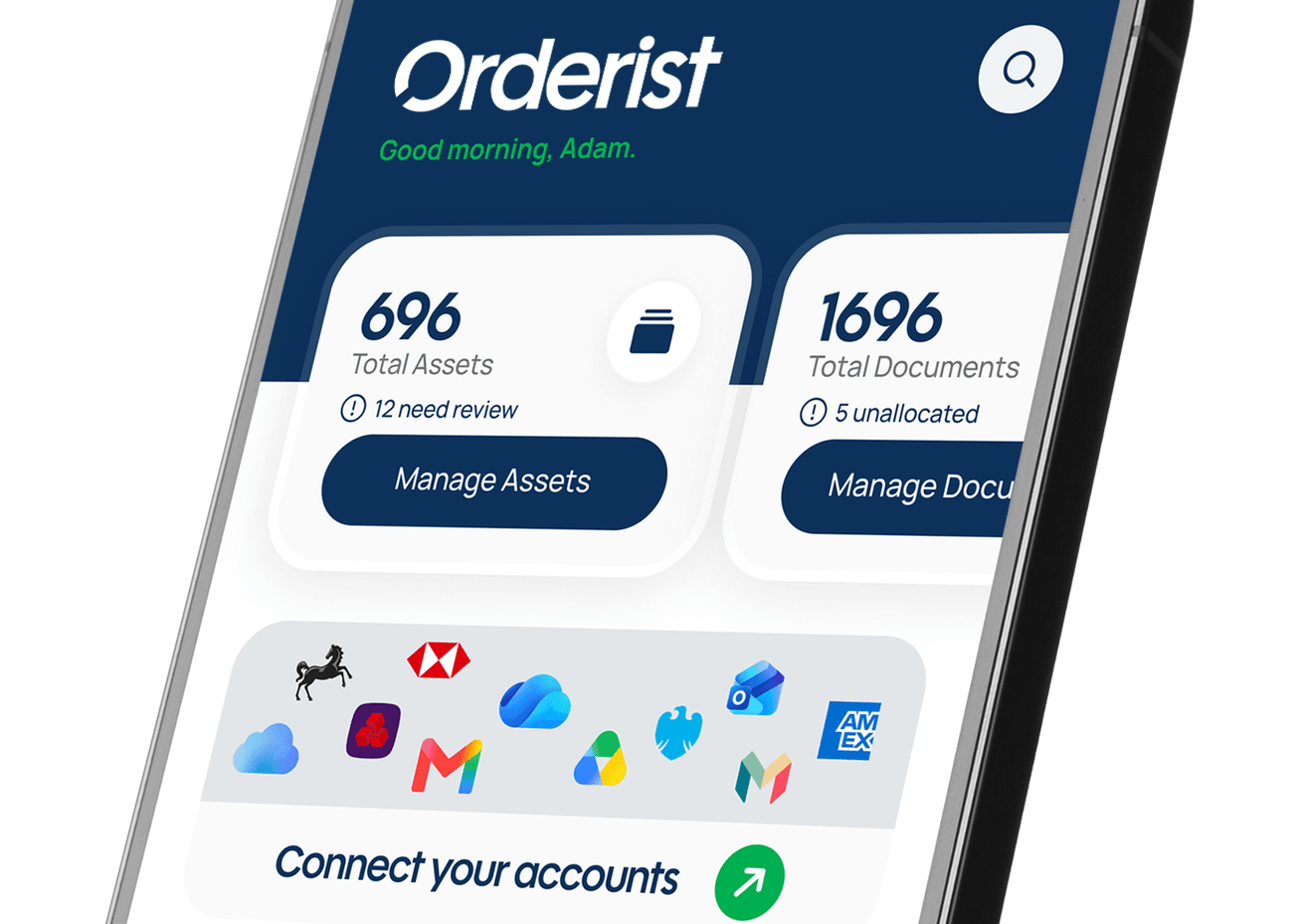
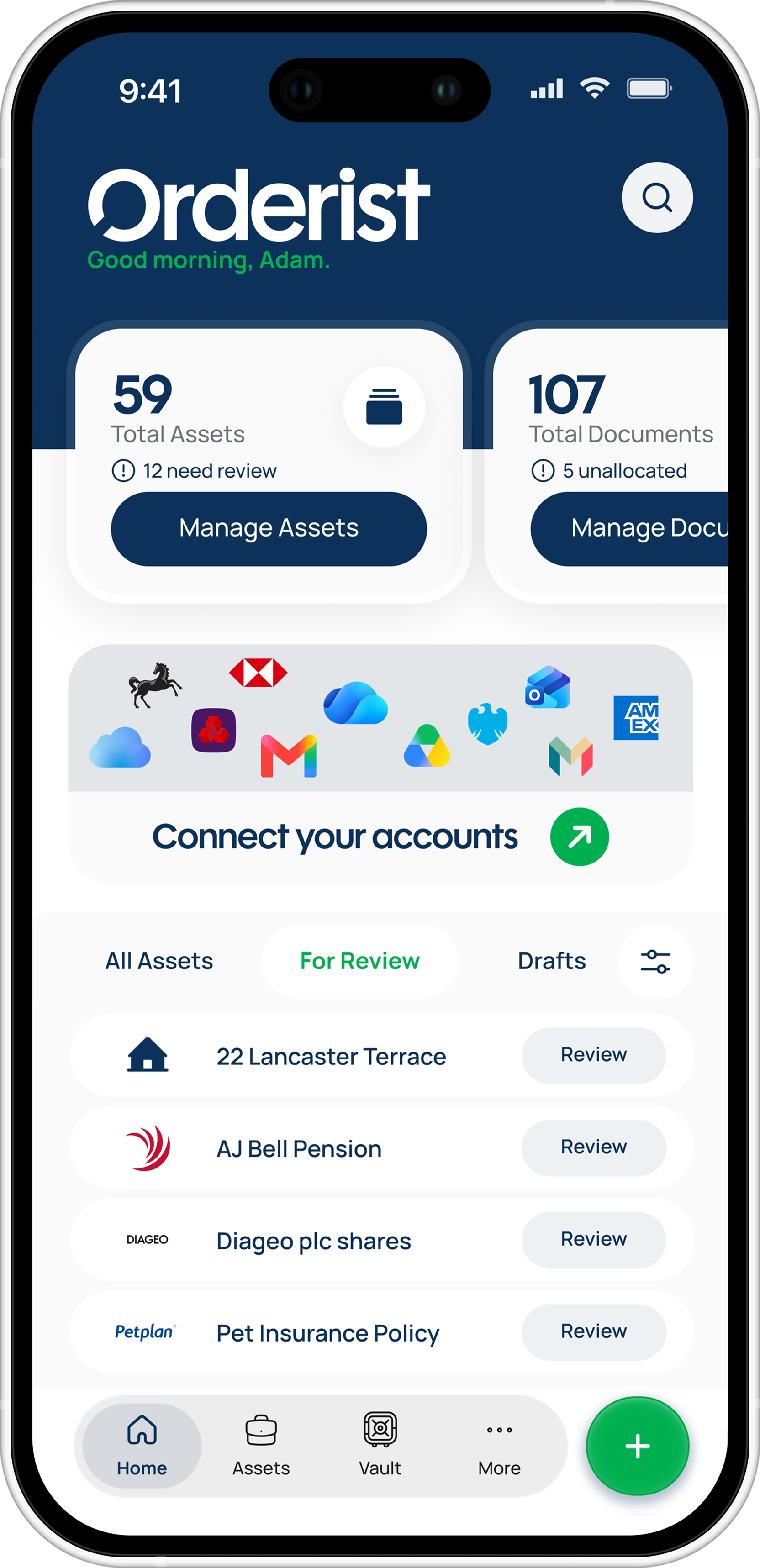
Orderist solves this by securely connecting to bank and email data to automatically discover buried financial footprint details and construct a single, complete asset register.
Coupled with an integrated Document Vault and automated release controls for executors and beneficiaries, Orderist replaces spreadsheets and paperwork with complete financial visibility and peace of mind.

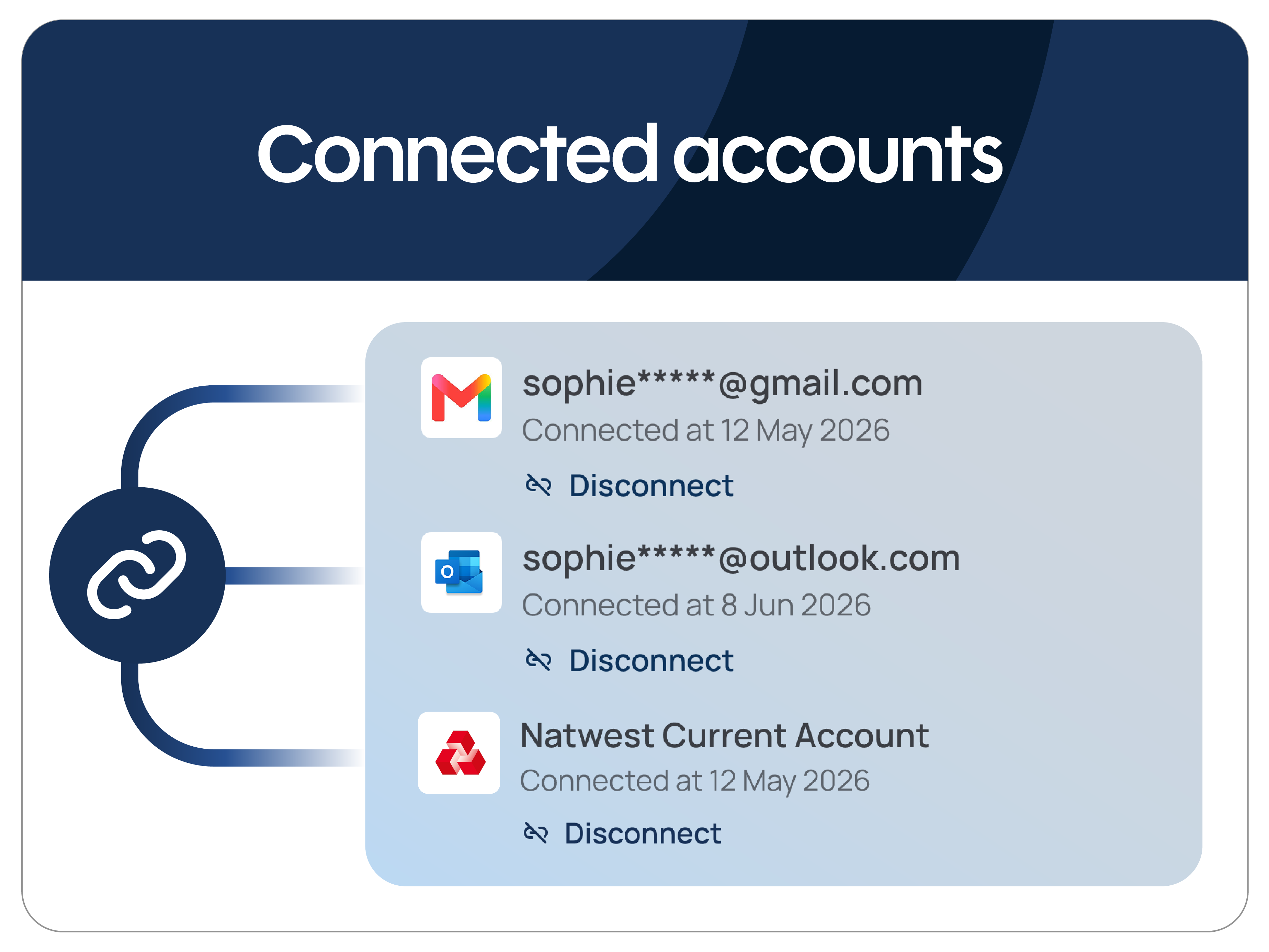
Securely and always read-only, connects to bank accounts, cloud drives and email to surface pensions, policies and accounts a client may have forgotten.

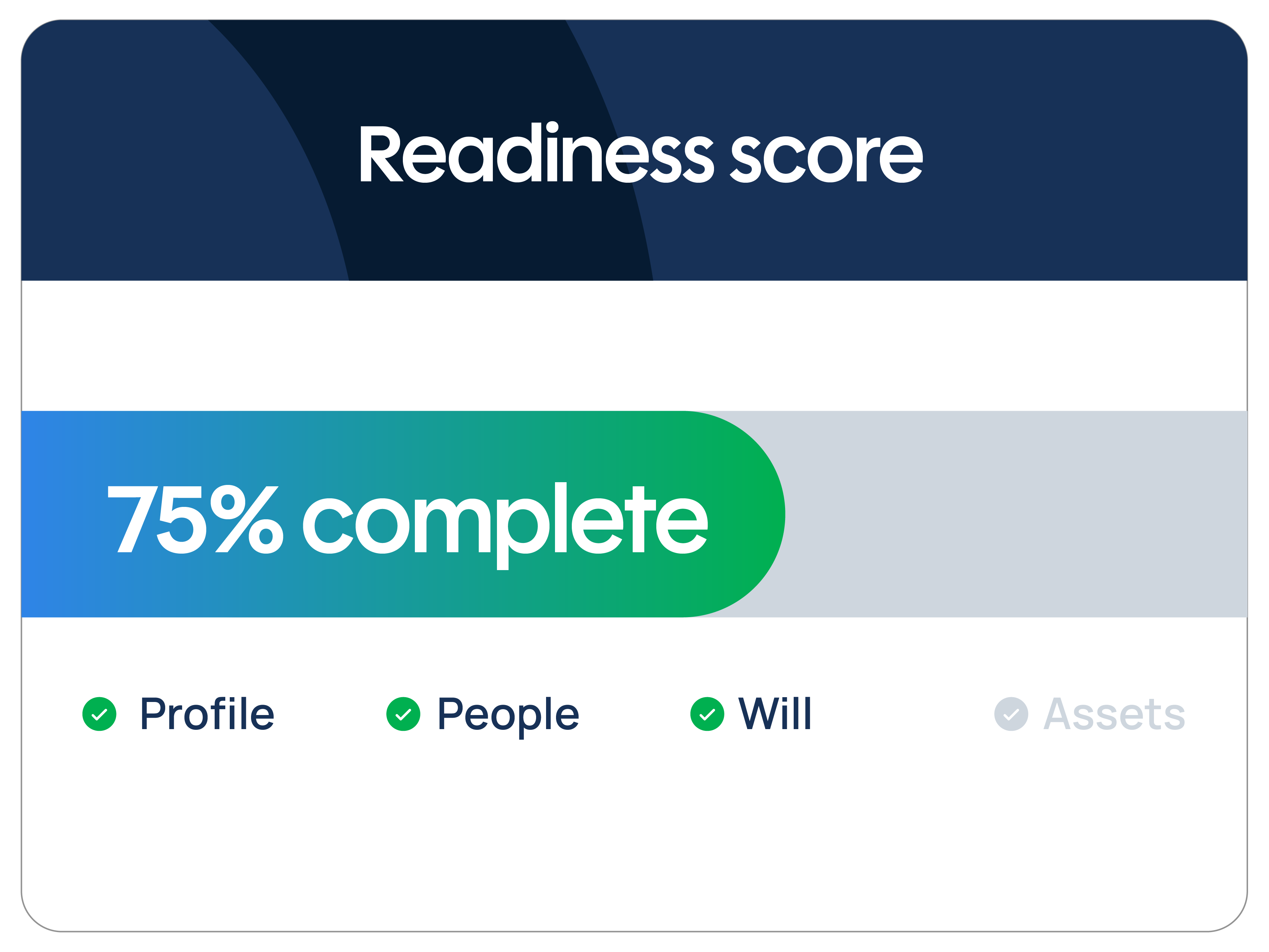
Organises every physical and digital asset alongside its associated deeds, policies, and statements into a single living record.

Once a client’s executor and emergency contact have each independently confirmed the death, the executor can begin settling the estate, and each beneficiary receives the assets and information allocated to them in the will.

Orderist helps your clients arrive at instruction already organised. Your firm still carries out the legal drafting, will-writing, and probate work that requires your qualification.
Recommend or require Orderist ahead of estate planning engagements, so clients bring a clearer picture of their assets and wishes.
Offer client access as part of your will-writing or probate preparation services.
The option to present Orderist as a branded, or co-branded digital extension of your private client practice.
One-off · tiered by firm size
Tiered by firm size
Scales with your clients
.png)
.png)